
Adorable but vulnerable guardians: A look at North American wildlife conservation through the lens of “baby animal stamps”

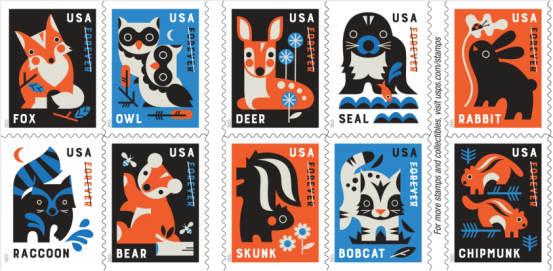
In 2025, the United States Postal Service (USPS) released a new set of commemorative stamps titled “Baby Wild Animals.” Upon first viewing, most people’s reaction was, “How adorable!” Fox cubs leap, raccoons play playfully by the water, and fawns quietly curl up in the grass—these images are tenderly captured on these tiny stamps, like a portable animal picture book.
But if you look at them for a few seconds longer, you’ll realize that these stamps aren’t just for cuteness.
Behind the Stamp Design
“I wanted to capture the energy of these little animals and make children curious about where they live,” said illustrator Tracy Walker. Collaborating with art director Greg Breeding, she combined the lives of 10 North American wildlife cubs with their natural habitats. The vibrant images convey a subtle message: their homes may be disappearing.
On the stamps, you can see a lynx cub nestling in its den, revealing its natural alertness; a raccoon playing near the water, a natural instinct to love water and be adept at washing food; and a seal pup nestling in the snow, seemingly unaware that global warming has made its icy territory increasingly vulnerable.
Unlike preachy environmental slogans, it is a “softly implanted” visual language that makes you remember it the first time you see it.
Stamps are created for environmental protection and also tell stories
The U.S. Postal Service has long excelled at using stamps to tell stories. From the launch of the “Wildlife Conservation” series in 1956 to the “50 Animals of North America” series in 1987, animal-themed stamps have consistently served the dual purpose of public education and aesthetic communication. The “Baby Wild Animals” series, however, takes a new approach: it no longer solely depicts majestic adult animals but instead focuses on the “growing” of life.
This shift isn’t just reflected in the design language; it also resonates with the emotions of contemporary audiences. We’re all familiar with the dominant logic of the “adult world,” but when a baby fox appears on a stamp, even the most rational recipient will pause for a second and silently think, “I hope it grows up.”
Is it worth collecting?
In addition to its visual beauty, this set of stamps also boasts the practical value of a Forever® stamp—no matter how postage rates change, these stamps never expire and can be used forever. This makes them a truly valuable collectible and a pleasure to use in mailing.
So some people buy them to collect, some buy them as gifts, and some simply buy several copies—one to send as a letter, one to keep as a collection, and one to stick on the cover of their diary, as if to express their recognition of beauty and goodness.
If you’re looking for collectible stamps that won’t break the bank, these thematically distinct and visually striking series can often be found in discount stamp sections or on philatelic discount platforms. Enjoy a balanced price-performance ratio while also possessing a piece of eco-friendly art.
Stamps, a letter from whom to the earth?
Some say these stamps are “mini environmental posters.” I think they’re more like letters to the future. You put a stamp with an animal image on it and drop it in the mailbox, like saying:
“I imagine a world where there are still fox pups running around and baby seals napping.”
In this age full of noise, stamps may be the quietest form of expression. But sometimes, it is these quiet things that have power.
If you are also moved by these lovely guardians, why not browse our website and find the “environmental messenger” in your heart in the selected discount stamps area? Collecting may be another way to protect.