When functionality meets aesthetics: Why is the Luna Moth non-printable stamp worth a look?

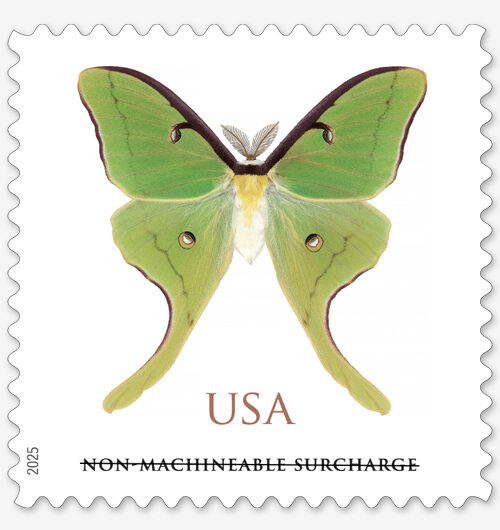
On August 16th, at the U.S. Stamp Exhibition in Schaumburg, Illinois, the United States Postal Service unveiled a seemingly pragmatic yet poetic new product: the Luna Moth Non-Machineable Surcharge stamp . Its price was no accident: with a face value of $1.27 (including the standard First Class Mail rate of 78¢ + the 49¢ Non-Machineable Surcharge) , it comes in a pane of 20. “NON-MACHINEABLE SURCHARGE” is clearly printed on the bottom, indicating that this is no ordinary Forever stamp, but rather a stamp specifically designed for letters “of a shape or nature that cannot be processed by postal machinery.”
But if you think of it only as a payment tool, you’re missing out on the more interesting side of this stamp.
From “surcharge” to “nocturnal aesthetics” – the collision of design and craftsmanship
The stamp’s visual appeal stems from meticulous artistry: USPS Art Director Derry Noyes recreated the image based on artist Joseph Scheer’s image of a pale green luna moth. Scheer used high-resolution extended-focus scanning to create multiple layers (up to 32) of the insect, then composited the overlapping images to perfectly capture the detailed fur, eyespots, and subtle tones of the night-time scene within a small, two-dimensional image.
The result is: a ticket originally marked “not machine-printable” instead attracts the eye with its extremely delicate, natural and realistic touch – an elegant compromise between functionality and aesthetics.
Why did USPS make “Not Printable” an art stamp?
The superficial reason is practical: the non-printable surcharge (49¢) compensates for the added costs of manual sorting and special handling required due to the shape, thickness, or material of the letters. But at a higher level, the USPS’s design of the “special fee stamp” as a nature-themed stamp has two implications:
Aestheticize daily “troubles” : “unusual packages” and “special letters” in postal operations are given visual beauty – as if to say: even postal exceptions are worthy of respect and appreciation.
Appealing to both the philatelic community and the general public : the limited edition of 20 sheets and the launch ceremony (held at the Schaumburg exhibition) make this stamp both practical and collectible – perfect for buyers who pursue both functionality and aesthetics.
Three practical suggestions for stamp collectors
First Day Postmark and First Day Booklet : If you want to maximize your collection value, focus on the first day of release (the Schaumburg venue) and purchase the first day cover with the first day postmark. The first day cover is often more memorable than the individual coins themselves.
Storage method : Since the colors and details of this type of stamps rely on gloss and layering, please avoid direct sunlight and use acid-free paper sleeves and hard booklets to prevent warping or fading.
The practical use is also very clever : this stamp is specially designed for square greeting cards, thick invitations and other non-printable mail. If you often send handmade cards or high-end invitations, using this stamp directly is both compliant and can add color to the letters.
Summary: Dual identities of a ticket
The Luna Moth stamp may seem like a solution to a “special fee,” but it demonstrates a simple truth: stamps can be simultaneously tools, works of art, and cultural relics . When a functional stamp is adorned with a sophisticated image, it becomes more than just a payment receipt; it becomes a shared recognition of natural beauty, handmade communication, and a slow-paced ritual.
Want to send an invitation that can’t be printed, yet still make it a treasured piece of art? This Luna Moth stamp deserves a spot in your album.
For stamp enthusiasts, whether following new releases or occasionally checking out discount stamps , these are gateways to the world of art. For the latest stamp news and authoritative price references , please visit our stamp platform .