

When stamps carry a nation’s pain: The cultural value of the 9/11 commemorative stamps

The terrorist attacks of September 11, 2001, forever changed the history of the United States and the world. The images of that day are not just images captured in the news; they leave indelible scars on a nation and countless individuals. How to commemorate this tragedy, how to express national mourning and solidarity, has become a crucial issue for American society. Among the many ways to commemorate, the small postage stamp has become a unique symbol that carries this history.
How does a stamp bear witness to history?
Stamps, originally intended as receipts for postage, are often imbued with deeper meaning. They are like miniature historical archives, capturing events and emotions within a single inch. After 9/11, the United States Postal Service acted swiftly, issuing commemorative stamps imbued with powerful symbolism. These stamps can be used in everyday correspondence and serve as enduring symbols of memory, enshrining that weighty period of history in people’s lives.
“United We Stand”: The fastest response
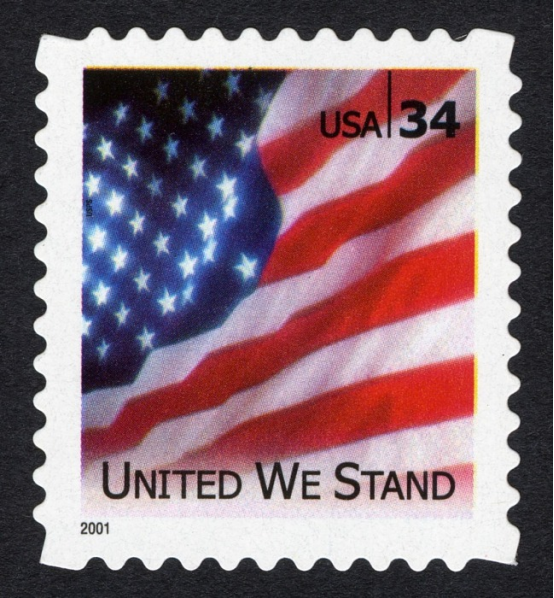
The “United We Stand” stamp was released in October 2001. Its design is remarkably simple, yet it possesses a powerful force that resonates deeply with the heart: a national flag and a slogan: United We Stand .
This stamp wasn’t just an artistic expression; it was a national statement to its people. American society at the time needed a symbol that could unite its scattered sorrows, and this stamp embodied that sentiment. Many people affixed it to letters to family and friends, whispering, “We’re still here, and we’ll keep going together.”
“Heroes of 2001”: Flags on the Ruins
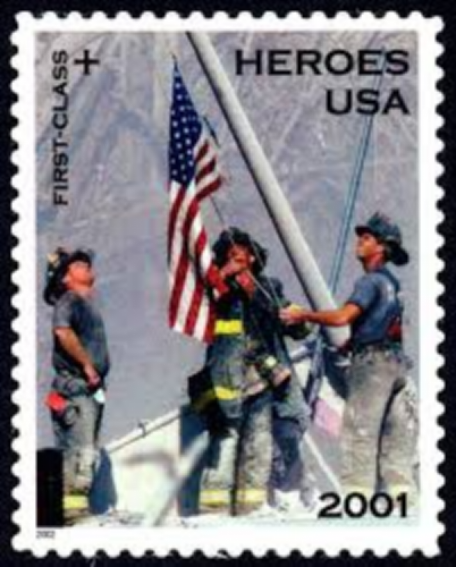
A year later, in 2002, the U.S. Postal Service issued the “Heroes of 2001” half stamp. The image was taken from a famous news photo: three firefighters raising the American flag at Ground Zero. This moment has become a symbolic memory for countless people.
What makes this stamp even more special is its price tag of 45 cents, 11 cents of which goes to a donation to support firefighters, police officers, and their families. It’s more than just a commemorative stamp; it’s a form of social assistance. Through it, ordinary people can pay tribute to heroes in the most direct way possible and make a tangible contribution.
Commemoration in circulation: the symbolic meaning of postage stamps
Compared to monuments or museums, stamps have a special attribute: they are “mobile.” Anyone can put a “United We Stand” or “Heroes of 2001” stamp on an everyday letter, allowing this memory to be passed on to another city or another family through the mail.
It is this combination of smallness and breadth that makes stamps a unique form of public commemoration. They allow memories to transcend solemn occasions and become part of people’s daily lives.
Collection and inheritance
Today, these 9/11 commemorative stamps have long been treasured by philatelists. But their significance far exceeds their market value. Each preserved stamp serves as a remembrance of the deceased, a tribute to the heroes, and a microcosm of that period in history.
In this small space, we can still feel the heaviness and tenacity of that era.
Conclusion
The pain of 9/11 will never go away, but stamps provide a unique way to bring memories into everyday life and transform pain into a force for unity.
Through these commemorative stamps, we see not only patterns and words, but also the choice made by a nation after the disaster – to remember, to unite, and to move forward.