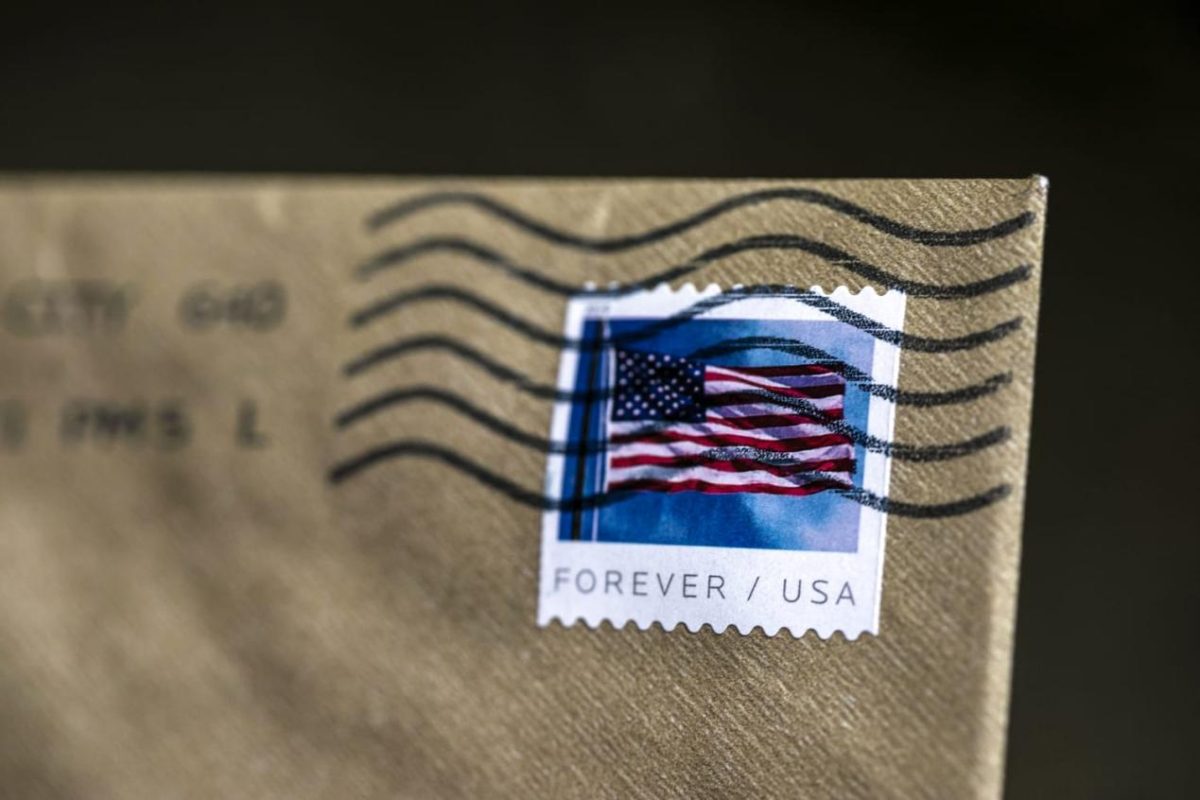

Don’t fall for it again! Learn three easy steps to spot fake discount stamps with the naked eye.

Hi everyone! Have you noticed a lot of tempting discount stamps on the market lately? Who wouldn’t love saving money on mail?
But here’s a warning: saving money is great, but be careful! There are more and more counterfeit discount stamps on the market, and you might easily fall for a scam.
Imagine if your mail was returned because it had a fake stamp, causing delays to important documents and even damaging your credit score—that would be a huge loss.
Not to mention, using fake stamps is illegal in the United States!
Don’t worry, today I’ll be your “expert” and teach you step-by-step how to easily identify those convincingly fake discount stamps using only the naked eye and simple tools. Follow my steps, and you too can become an expert in distinguishing genuine from counterfeit stamps, leaving no room for fakes to hide!
1. Why are there counterfeit “discount stamps”? Understanding the risks is key to better avoiding them.
1.1 The allure of discount stamps: a money-saving trick?
Discount stamps generally refer to stamps sold at a price lower than their face value. These may include:
- Old stamps (but still valid)
- Large-scale purchase of stock stamps
- Discount stamps obtained through certain specific channels
For individual users or small businesses, purchasing discount stamps is undoubtedly a good way to save on postage costs.
However, it is precisely this “cheap” mentality that gives scammers an opportunity to take advantage of them.
1.2 The counterfeit stamp industry chain and its harms: more than just a waste of money
Counterfeit stamps have extremely low production costs but can be sold at prices close to genuine products, resulting in huge profits. Most of these counterfeit stamps originate overseas and enter the market through various channels.
Using them exposes you to multiple risks:
- Legal Liability: Using counterfeit stamps is illegal. In the United States, using counterfeit stamps is a federal felony. While ordinary users are rarely prosecuted, if discovered, your mail will be returned, and in serious cases, you may face fines or prosecution.
- Economic Losses: Returned or Delayed Mail: Mail with counterfeit stamps will be identified and returned by the United States Postal Service (USPS) sorting machines. This means your mail may not be delivered on time, potentially causing delays for important bills, contracts, and invitations, resulting in unnecessary trouble and losses.
- Damaged Credit: Personal or Business Image Affected: If you are a business and use counterfeit stamps to send mail to customers, it will seriously damage your brand image and customer trust once the customer discovers it or the mail is returned.
2. What do you need to prepare to identify counterfeit discount stamps? To do a good job, you must first have the right tools.
Don’t think identifying counterfeit stamps is complicated; it’s actually very simple! You only need two small tools:
- 2.1 Jeweler’s Loupe: A powerful tool for observing details. A 10x or higher magnification magnifying glass is sufficient to observe the perforated edges and printing details of stamps.
- 2.2 Ultraviolet Light (UV Light / Blacklight): The ultimate tool for identifying Phosphor Tagging. Commercially available UV lamps used for banknote verification can be very useful. This is one of the most crucial tools for identifying genuine and counterfeit stamps.
- 2.3 A meticulous mind: Patience is the best tool. Of course, the most important thing is that you need a little patience to carefully observe every detail of the stamp.
3. Three core techniques: Detailed steps for identifying counterfeit stamps using the naked eye and simple tools (with illustrations)
3.1 Method 1: Check the Perforations (The Perforation Test) – the easiest place to spot a fake stamp.
This is the easiest place to distinguish between real and fake stamps; many counterfeit stamps will be exposed here.
3.1.1 The perforations of genuine stamps: sharp, with fine fibrous streaks, and naturally irregular. The perforations of genuine stamps are formed by machine stamping or die-cutting. When separated, there will be traces of paper fibers being stretched.
The edges are usually very sharp and clear, and there will be a little bit of fine paper fiber streaking.
Upon close observation, you will find that its perforation shape may not be so “perfect”, and there may even be some minor flaws, but this is precisely the natural characteristic of genuine stamps.
3.1.2 Perforation characteristics of counterfeit stamps: Smooth die-cutting, excessively rounded or rough edges, flat edges. Many counterfeit stamps are directly cut using a cheap die, so the perforated edges appear abnormally smooth, flat, and even somewhat rounded, lacking any paper fiber texture, like an ordinary sticker.
Some rough counterfeit stamps may have rough edges, but these are completely different from the fibrous texture of genuine stamps.
3.1.3 Hands-on Exercise: How to use a magnifying glass to observe the details of the perforations. Pick up your magnifying glass and place the edge of the stamp in a well-lit place to observe it carefully. Compare it with a stamp that you know is genuine (such as one purchased from the post office), and you will find obvious differences.
3.2 Method 2: The UV Light Test – a “truth serum” for distinguishing genuine from counterfeit stamps.
This is the “secret weapon” for identifying modern U.S. stamps, because the U.S. Postal Service applies a special phosphorescent layer (Phosphor Tagging) to the surface of the stamps to facilitate machine sorting.
3.2.1 What is Phosphor Tagging? The USPS’s security secret: It sprays an invisible chemical substance—phosphorescent agent—on stamps. This substance emits fluorescence at a specific wavelength under ultraviolet light.
Postal sorting machines identify this fluorescence to determine the validity of stamps and perform automated sorting.
3.2.2 Reaction of genuine stamps: Bright, uniform green fluorescence. In a dark environment, when a genuine stamp is illuminated with an ultraviolet lamp, it will emit a bright, uniform green fluorescence. This fluorescence usually covers a specific area of the stamp (such as the stamp design itself or the edge).
3.2.3 The reaction of counterfeit stamps: Dull, lifeless, or emitting a strange bluish-white light. Counterfeit stamps usually do not have this phosphorescent layer. Therefore, when you shine a UV light on a counterfeit stamp, it will appear lifeless and show no fluorescent reaction.
Sometimes, some counterfeit stamps may emit a strange bright bluish-white light due to the presence of optical brighteners in the cheap paper, but this is definitely not the green phosphorescence of genuine stamps.
3.2.4 Practical Exercise: How to Properly Use a UV Lamp for Detection. Find a relatively dark environment and turn off the indoor lights. Turn on the UV lamp and hold it about 5-10 cm away from the stamp. Carefully observe the light reaction on the stamp surface.
3.3 Method 3: Paper & Print Quality Test – The Art of Touch and Observation
Genuine stamps are, after all, officially produced, and have strict standards in terms of paper and printing.
3.3.1 Characteristics of genuine stamps: Thick and textured paper, clear and sharp patterns, solid printing. Genuine stamps are usually printed on thicker paper with a good feel and texture.
The printed patterns are clear and sharp, and the colors are rich. Even under high magnification, the lines and text are solid and continuous, without obvious ink spots or blurring.
3.3.2 Characteristics of Counterfeit Stamps: Thin, Smooth Paper Resembling Sticker; Blurry Patterns; Obvious Dot Matrix Printing. To save costs, counterfeit stamps often use cheap coated paper or ordinary sticker materials, which are usually thin, smooth, and lack texture.
The printing quality is also often very poor; the patterns may be blurry, and the colors may be incorrect.
Most obviously, under high magnification, the patterns on counterfeit stamps will show a dense dot matrix printing effect, a typical characteristic of low-cost printing.
3.3.3 Hands-on Practice: Touch and Comparison of Printing Details Under High Magnification. Gently rub the surface of the stamp with your fingers to feel the thickness and texture of the paper. Then, observe the details of the stamp design with a magnifying glass, especially the edge lines and small text.
4. Advanced Recognition Skills: Become an Expert at Identifying Discount Stamps
Besides the three methods mentioned above, there are some details that can help you make a further judgment:
- 4.1 Size and Design Consistency: Even Minor Deviations Can Expose Counterfeits. Genuine stamps adhere to strict standards in size and design. If you have a known genuine stamp of the same design, compare the size, proportions, and placement of the design. Minor deviations could be a sign of a counterfeit.
- 4.2 Adhesive and Security Features: Characteristics of Modern Self-Adhesive Stamps (if applicable). Modern self-adhesive stamps typically have a specific adhesive texture and cutting method. Some may even have tiny security features such as small cuts or patterns. Counterfeit stamps may have insufficient or excessive adhesive, or even lack specific security features.
- 4.3 Warning Signs of Unusually Cheap Prices: Don’t be greedy for small gains and end up losing big. If a discount stamp is unbelievably cheap (for example, a $1 stamp sold for just a few cents), it’s almost certainly counterfeit. There’s always a floor to the market price; excessively low discounts often mean huge risks.
5. What if I buy counterfeit Discount Stamps? Don’t panic, do this!
Don’t panic if you unfortunately buy counterfeit stamps. Remember the following points:
- 5.1 Do not use! This is the most important step: Under no circumstances should you affix counterfeit stamps to letters and send them out. This will not only waste your time and money, but may also expose you to legal risks.
- 5.2 Preserve Evidence: Keep all purchase receipts, transaction records, and any suspicious discount stamps themselves. These are important pieces of evidence when you seek redress.
- 5.3 Contact the seller or platform: Try to get a refund or file a complaint. First, contact the seller from whom you purchased the stamps and request a refund. If the seller refuses or does not respond, you can file a complaint with the platform where you purchased the stamps (such as eBay, Amazon, etc.) and request their intervention.
- 5.4 Report to relevant agencies: To protect your consumer rights, you can report to the United States Postal Inspection Service (USPIS) and provide all the information you have. This will not only help you but also stop criminals from continuing their wrongdoing.
6. How to avoid buying counterfeit discount stamps at the source? Prevention is the best medicine.
Instead of trying to fix things afterward, it’s better to eliminate counterfeit goods from the start!
- 6.1 Purchase only from authorized or reputable sources. The safest way is to buy stamps from the USPS official website, post offices, or large, well-known retailers such as Costco and Walmart.
- 6.2 Beware of “unbelievably low prices”: Prices that are too low are often a trap. Remember, discount stamps have limits. If a deal sounds too good to be true, it’s likely fake.
- 6.3 Prioritize merchants that offer authentication and refund guarantees. Choose merchants that explicitly promise to provide genuine products and have a sound refund policy.
- 6.4 Highly Recommended: selldiscountstamps.com – How do we ensure every stamp is authentic?
At selldiscountstamps.com, we understand your desire for genuine stamps. Therefore, we promise that every discount stamp listed undergoes both professional UV testing and manual verification to ensure they are 100% genuine and safe to use.
We offer a full money-back guarantee for worry-free shopping. Click to visit our website and select the authentic discount stamps you need!
7. Frequently Asked Questions (FAQs): You might also want to know about the authenticity of Discount Stamps.
- Q1: What are the serious consequences of using counterfeit Discount Stamps?A1: The main consequences include returned mail, mailing delays, financial losses, and in extreme cases, legal liability (federal felony).
- Q2: Do all discount stamps need to be tested with a UV lamp?A2: UV testing is recommended for all modern, self-adhesive U.S. stamps, as they typically contain a phosphorescent layer. For older or non-U.S. stamps, UV testing may not be the sole method of identification, but it can still be used as a supplementary method.
- Q3: If I don’t have a UV lamp or a magnifying glass, are there other identification methods?
A3: Paper texture and printing quality (the third method) can be used for preliminary judgment without tools. However, for greater accuracy, it is strongly recommended to purchase a simple magnifying glass and a UV lamp. They are inexpensive but can greatly improve the success rate of identification. - Q4: Are those online “bulk clearance” discount stamps trustworthy?
A4: Be very careful. Many counterfeit stamps are sold under the guise of “bulk clearance.” Always verify the seller’s reputation and reviews, and carefully read their return policy. If the price is unusually low, be very wary.
In summary: Keep your eyes open, say goodbye to counterfeit Discount Stamps, and send every letter with peace of mind!
Now you’ve mastered the key to identifying counterfeit discount stamps! Whether it’s checking the perforations, shining a UV light on them, or feeling the paper to examine the printing, these methods can help you effectively avoid traps. Remember, while pursuing bargains, protecting your rights and reputation is paramount.
Hopefully, this guide has been helpful. Next time you buy discount stamps, don’t forget to use these tips. Let’s say goodbye to counterfeit products and send every important letter with peace of mind!